
Composite
Restricted
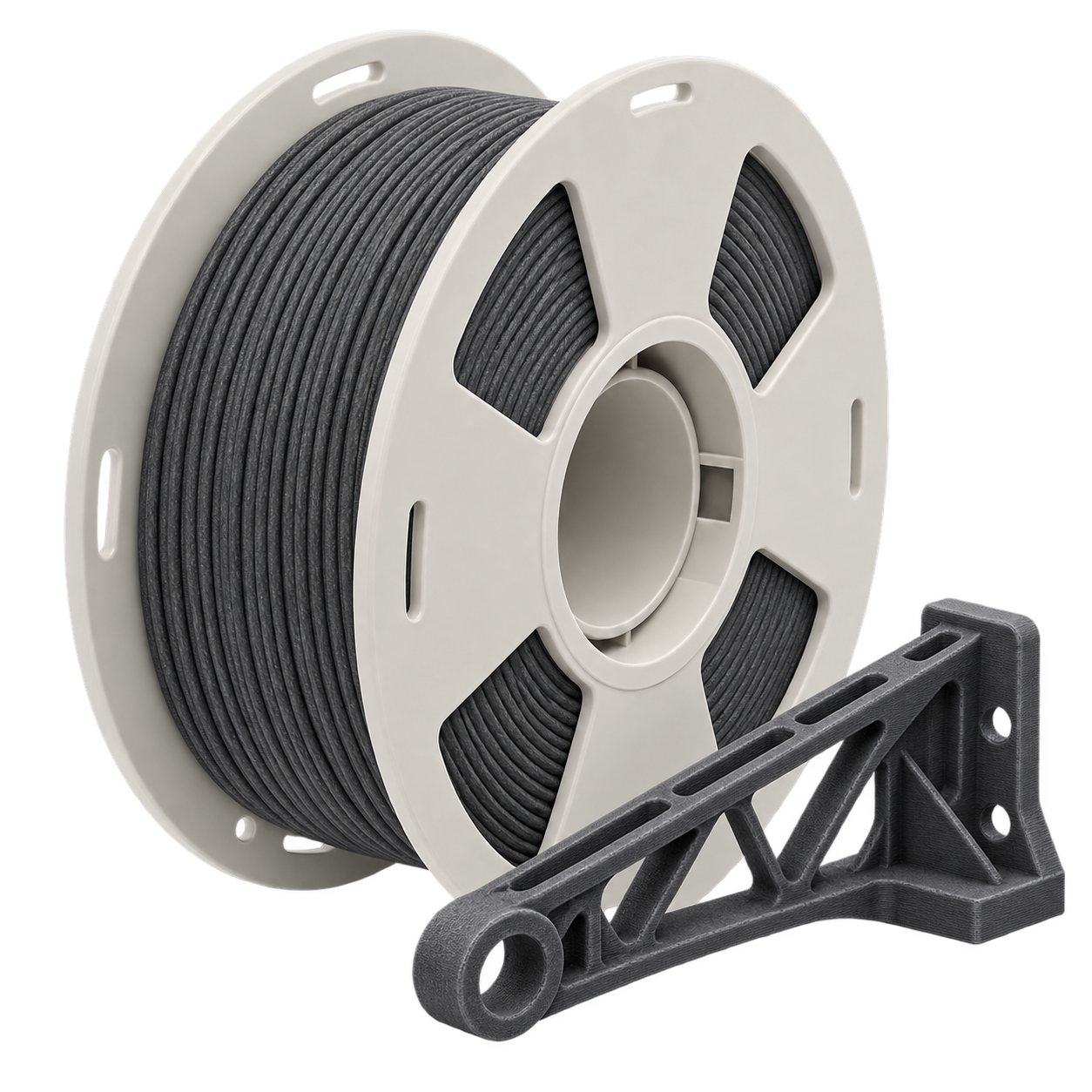
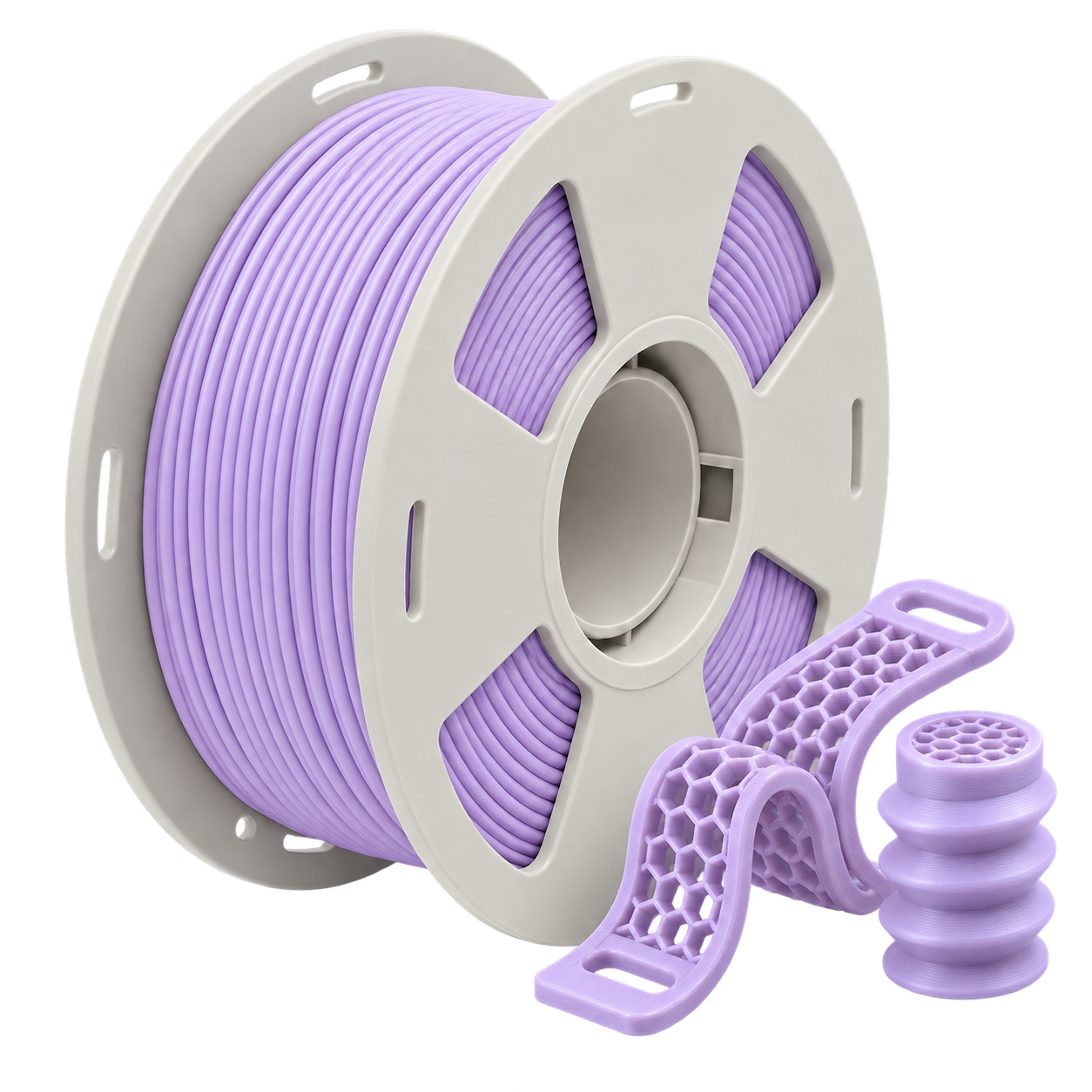
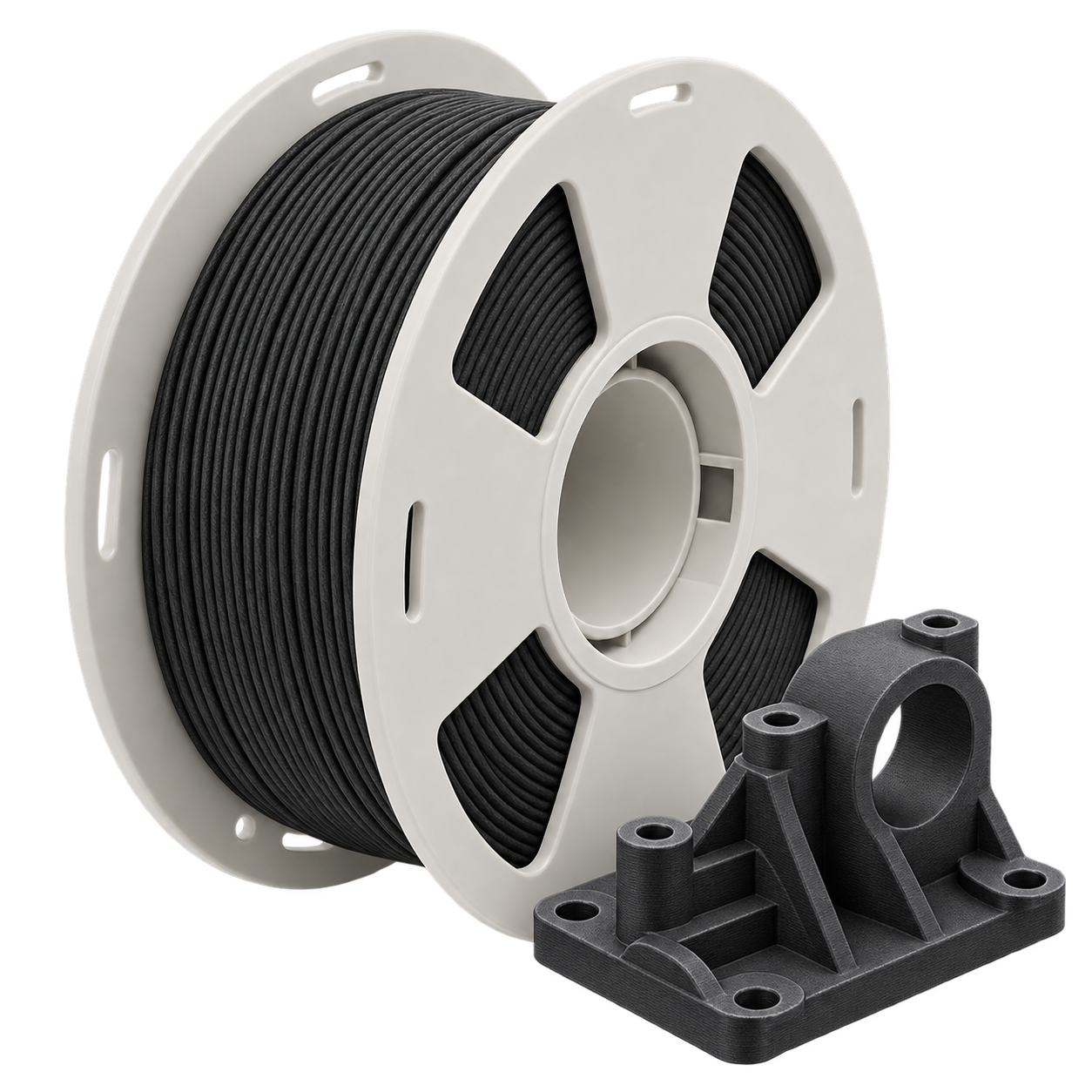
Carbon-fibre-filled filament
Short-carbon-fibre composite filament, predominantly PLA or PETG with a dispersed carbon-fibre fraction of 5-10%. Stiffer and far more abrasive to tooling than the unfilled polymer. Mechanical post-processing breaks matrix and fibre together, producing mixed polymer and carbon-fibre particulate.


Never do this
- Never sand, grind, route, mill, drill, saw, aggressively file or otherwise machine carbon-fibre-filled printed parts. Finish the geometry in the print.
- Never use compressed air to clean carbon-fibre particulate off a damaged or accidentally abraded part.
Hazards
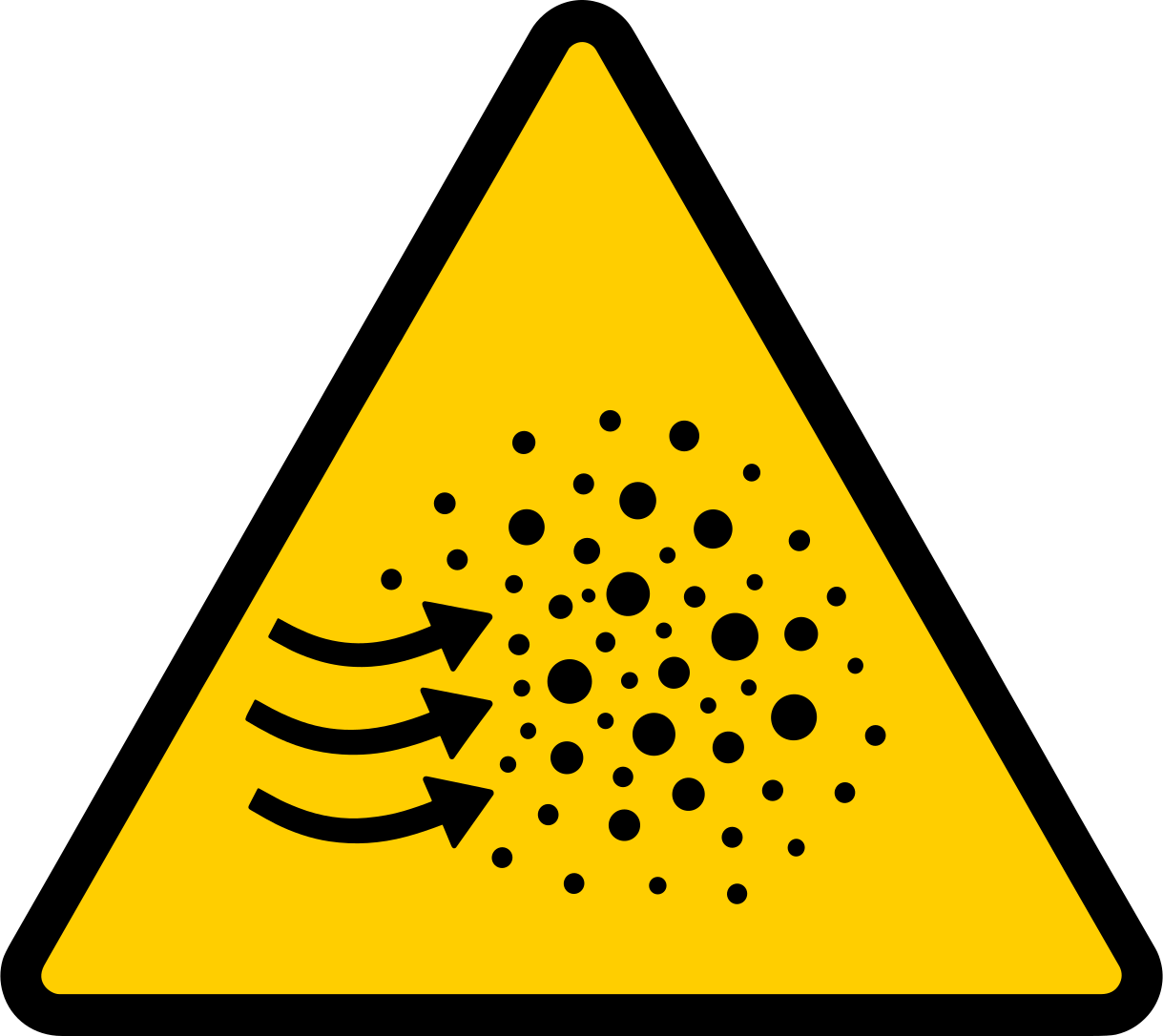
Dust / Airborne Particulate

Fumes / Vapors
Controls in place
Enclosure and source exhaust at the printer. Carbonaceous additives can shift what a printer emits, so this matters before anyone picks up sandpaper.
For post-processing the control is elimination: printed parts are not machined here at all, so the fibre-containing dust is never generated. Finish the geometry in the print.
Not permitted on
No machines are listed as prohibited for this material. That is not an approval — follow the requirements on the machine you are using.
Good to know
The distinction that matters is printing versus post-processing. Printing is an enclosed, source-controlled operation and is approved. Machining a printed part is what liberates fibre-containing dust, and that is the route this centre has chosen not to support.
Carbonaceous additives can also shift what a printer emits, so enclosure and source exhaust stay relevant before anyone picks up sandpaper. Printing should not be described as categorically fibre-free.
The 5-10% fibre figure comes from the Bambu safety data sheets for PLA CF and PETG CF and should be re-checked against the current SDS for each exact spool.
Documents
Document
Type
Status