
Plastic
Needs review
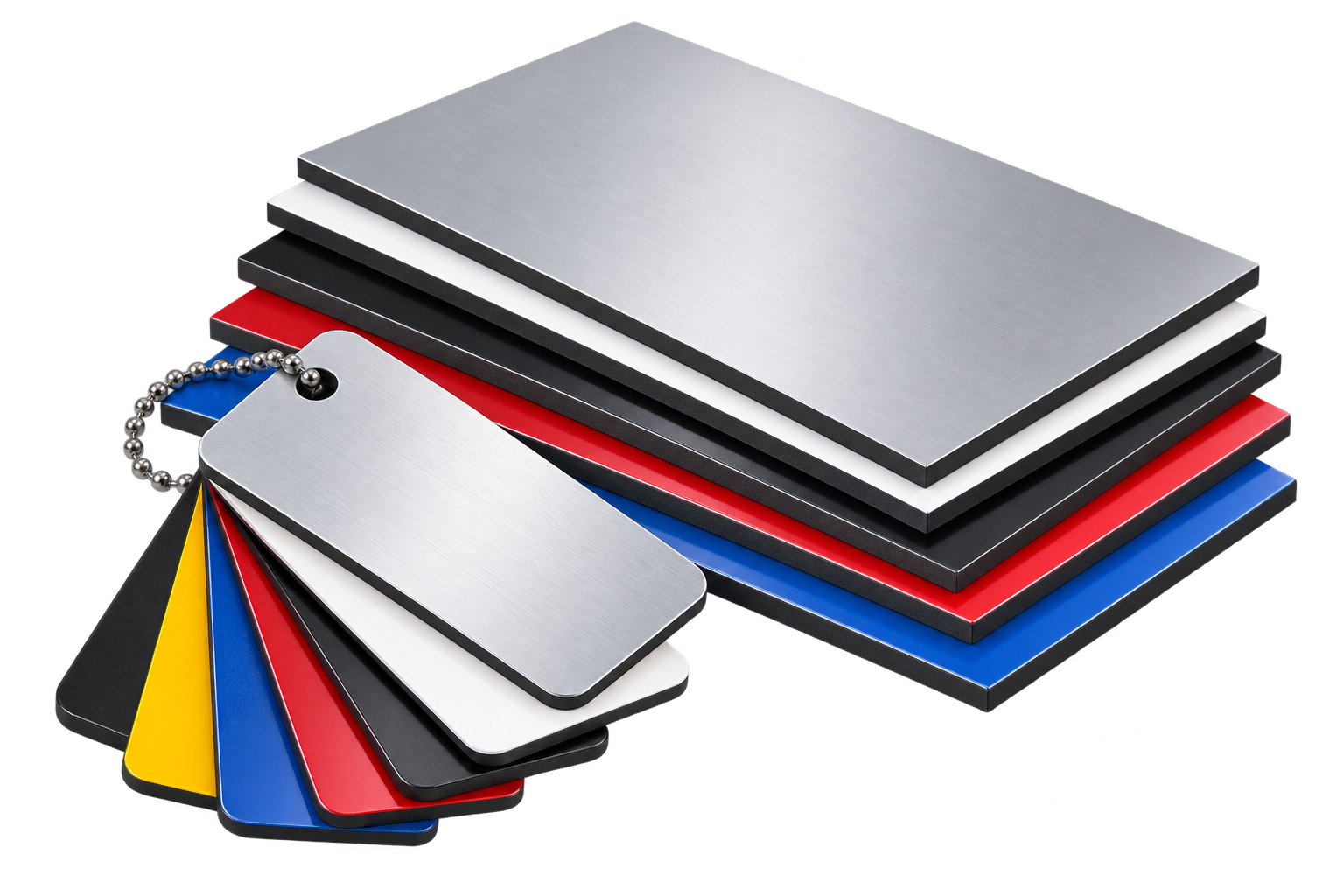
Laser engraving laminate
A purchasing category rather than one material. Thin engraving laminates use impact acrylic, ABS, PET or other polymer substrates with a contrasting surface layer, so laser behaviour depends on the exact SKU rather than on how the sheet looks.
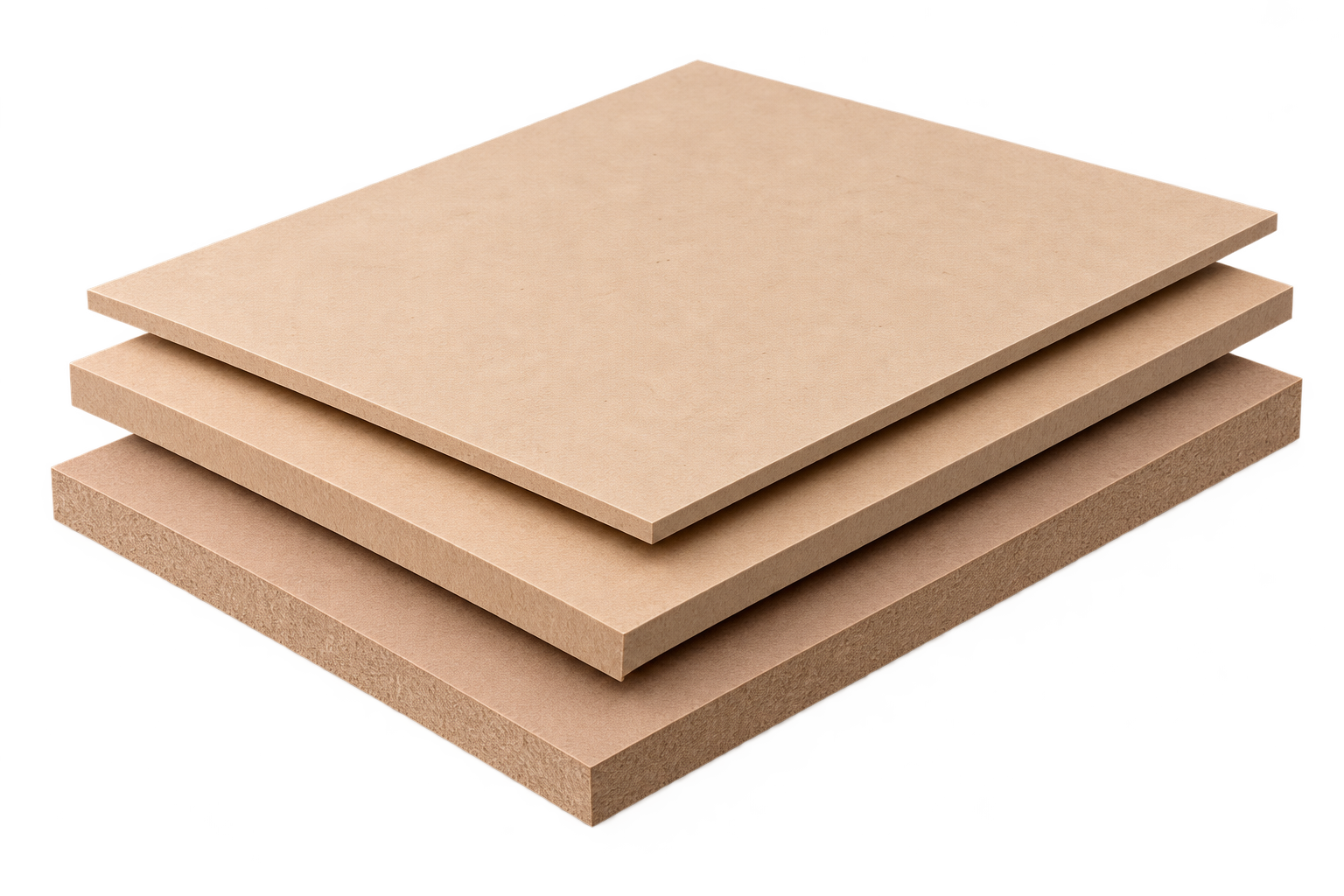
Never do this
- Never laser cut or engrave a laminate unless the exact manufacturer and SKU are positively identified and current manufacturer documentation confirms that product is laserable and PVC-free.
- Never infer laser compatibility from colour, layer structure, appearance, or a generic description such as "engraving plastic".
Hazards
Fumes / Vapors
Fire / Ignition
Controls in place
Laser source exhaust, but only on stock whose documentation positively identifies it as laserable. The control that comes first here is substitution - buying only documented laserable, PVC-free stock - because no amount of extraction makes an unidentified laminate safe to cut.
ABS-based grades produce styrene fume and want the extraction running harder than the acrylic grades do.
Not permitted on
No machines are listed as prohibited for this material. That is not an approval — follow the requirements on the machine you are using.
Good to know
The identity of the stock is the safety control here, and right now it is unresolved. Rowmark markets LaserMax as laserable impact acrylic. Its current Mattes page identifies the substrate as microsurfaced ABS and does not show a laserable attribute. Its current Mates page says modified acrylic, while the safety data sheet held here says polyethylene terephthalate above 80%.
So the rule is not simply PVC-free. PVC-free is a minimum condition, not evidence of laser suitability. Treat ABS and styrenic grades as a separate fume case rather than assuming they behave like acrylic.
Documents
Document
Type
Status